Nvidia – Can it Reach $1 Trillion in Revenue

During the recent GTC 2026 conference, Nvidia once again demonstrated that it plays in its own league. The bar it had previously set for itself was raised even higher with an ambitious revenue forecast of one trillion dollars by the end of 2027, immediately prompting investors to question the feasibility of this goal. Is this an empty promise, or rather a bold declaration setting the direction for the entire AI market?
At first glance, the numbers may seem almost impossible to achieve. Assuming the trillion is spread over two years, this equates to roughly five hundred billion dollars per year, or one hundred twenty-five billion dollars in revenue per quarter. By comparison, Nvidia’s most recent quarter delivered nearly seventy billion dollars in revenue, an outstanding result that exceeded analysts’ expectations but still fell short of the symbolic one hundred billion-dollar mark. According to earlier forecasts, the company was expected to reach this milestone only by the end of this year under the most optimistic scenario, highlighting the scale of the challenge Nvidia has set for itself.
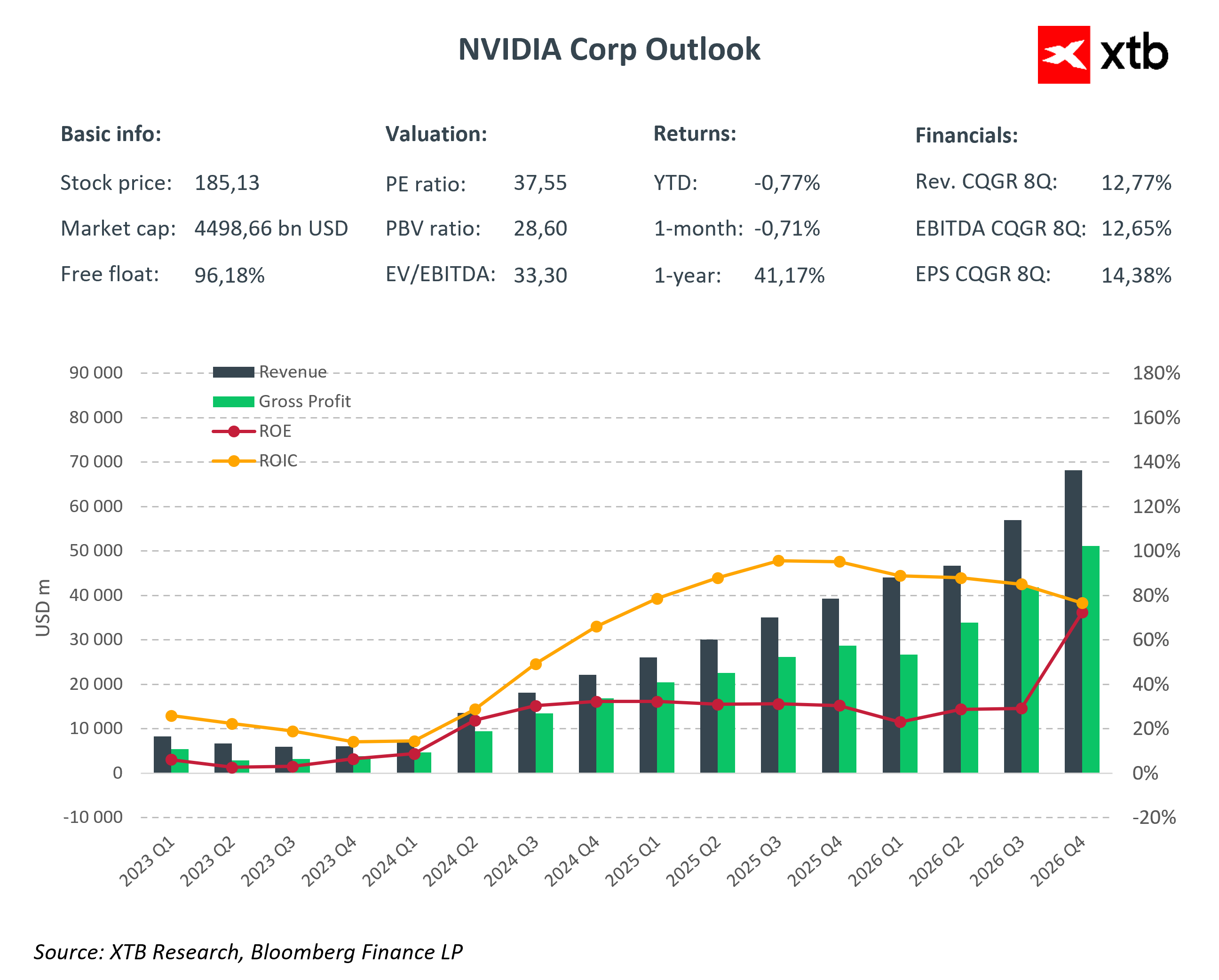
However, this does not mean that Nvidia has promised something unattainable. The company has become a central component of the artificial intelligence infrastructure that powers the largest models and data centers. Training new AI models and expanding data centers requires colossal quantities of the latest chips, both from Nvidia and its competitors, which naturally drives high demand and supports projected revenue growth. Nvidia’s chips, particularly in the Blackwell and Vera Rubin generations, deliver performance and scalability that competitors are still unable to match. This technological advantage allows the company not only to set prices but also to attract customers despite the enormous investments required to expand AI infrastructure.
At the same time, U.S. Big Tech companies plan to spend approximately six hundred fifty billion dollars this year on AI-related capital expenditures, covering data centers, hardware, and infrastructure. If these investments remain at a high level, Nvidia has a real chance of reaching its projected trillion-dollar revenue target, especially since its chips may be generationally superior to the competition, offering a performance advantage that is difficult for others to replicate.
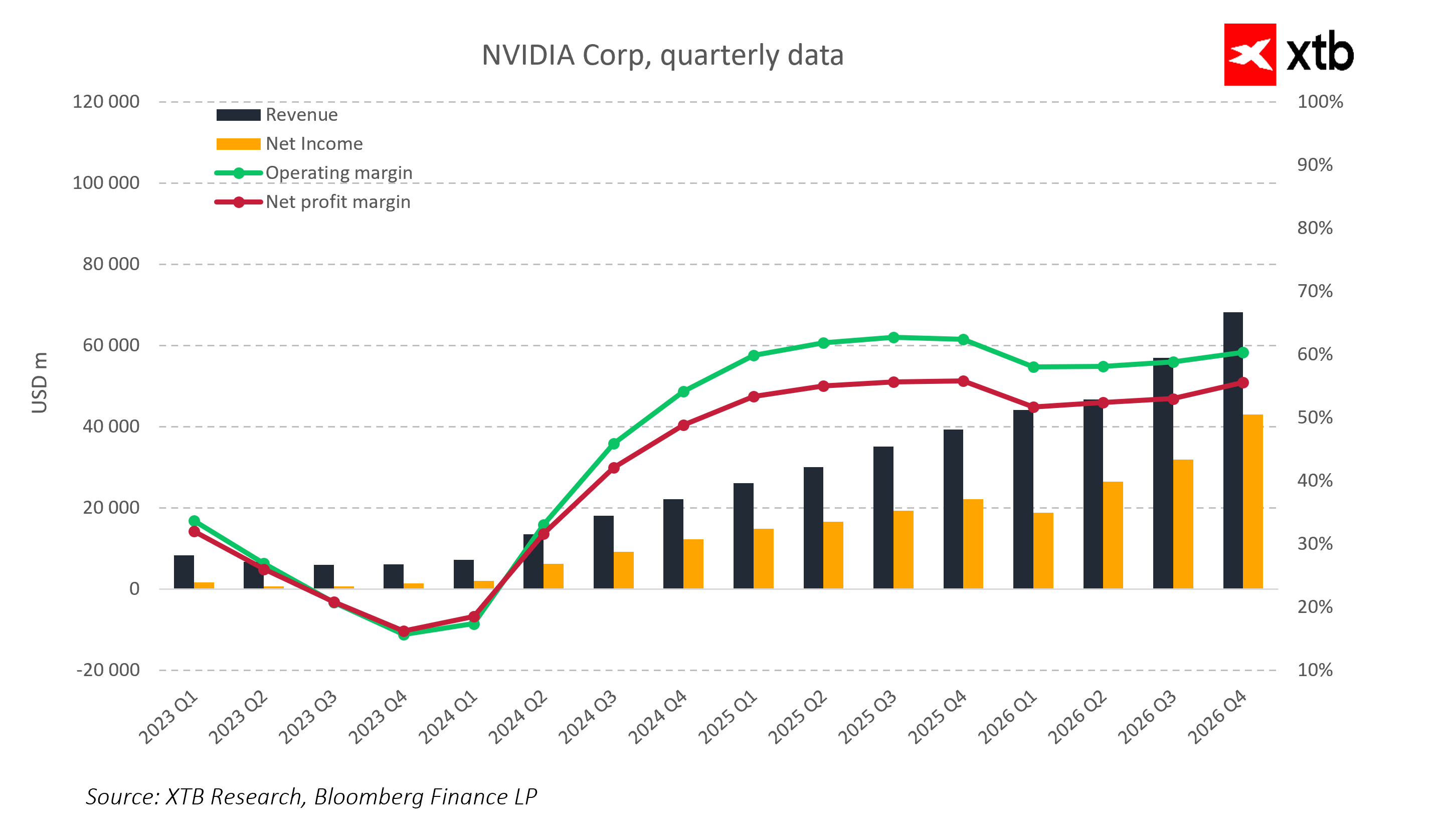
Of course, nothing is certain. Key risk factors include the pace of capital expenditures by major technology companies, competition from both Western chip manufacturers and Chinese AI firms offering cheaper alternatives, and macroeconomic variables such as energy costs, which could affect the growth of data centers. Despite these risks, current market signals indicate that Big Tech cannot afford to slow down investment, as the race for technological dominance does not allow for pauses, and any delay could result in a loss of competitive advantage. Additionally, the growing competition from China and Chinese companies, which are closely monitoring global markets, must be taken into account.
So, is Nvidia’s forecast merely a vision, or does it reflect a strategy to be a key player in the entire AI ecosystem? Beyond selling chips, the company is developing software, tools for training models, and AI platforms, which strengthens customer loyalty and reduces the risk of migration to competitors. In practice, Nvidia is setting a monumental milestone that would seem unattainable for many companies, but for Nvidia, with sufficient client investment, technological advantage, and effective marketing, it is not impossible.
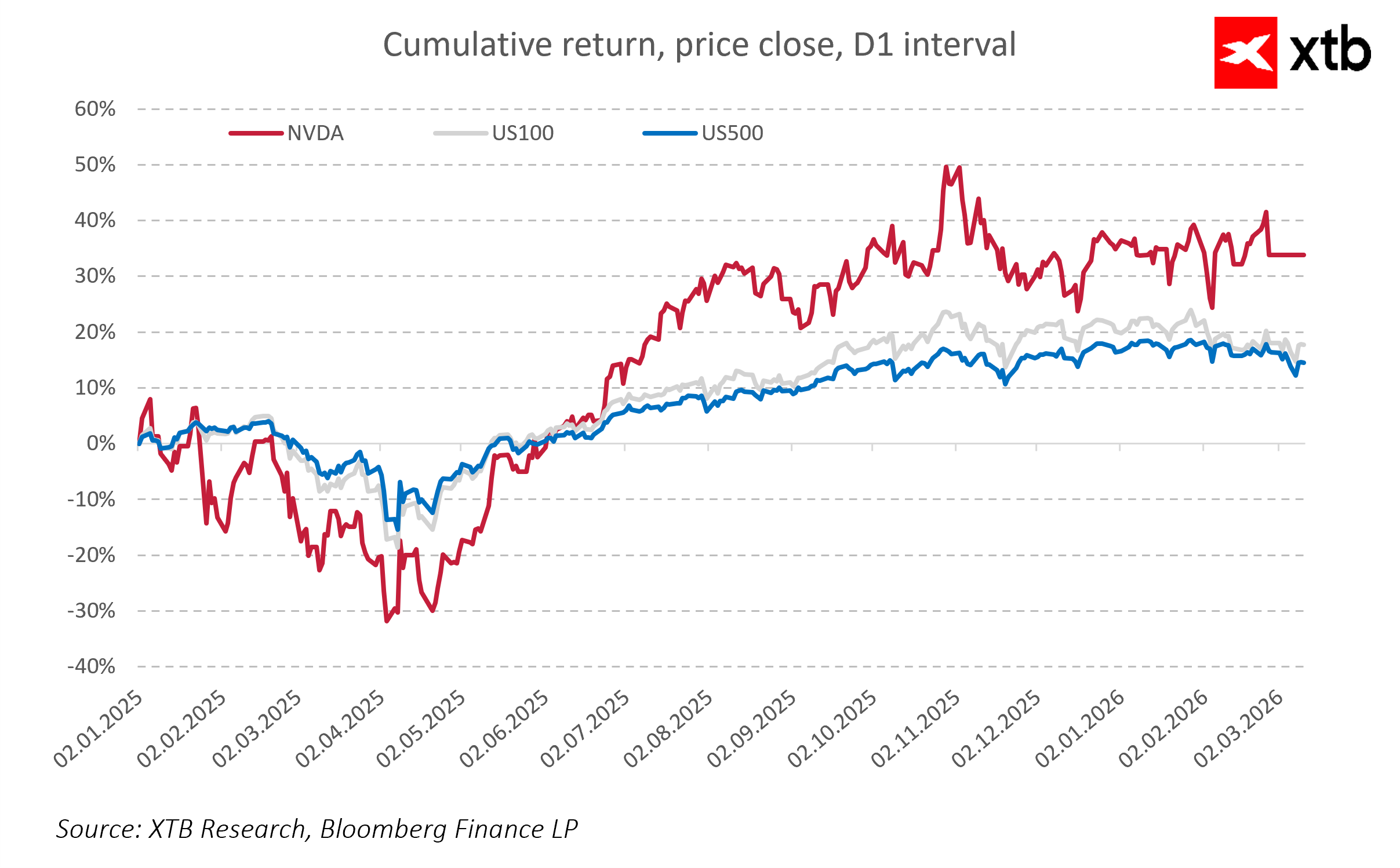
Once again, the company is demonstrating that it sets its own standards in the AI industry. The forecasted revenue of one trillion dollars by the end of 2027 is extremely ambitious but achievable if major technology companies maintain high levels of capital expenditure. Nvidia is not just selling chips; it is building a complete AI infrastructure ecosystem, raising the barrier to entry for competitors. Risks exist, yet the company’s strategy and market position suggest that the trillion-dollar revenue goal could become a reality, not merely an ambitious declaration. Nvidia is raising the bar, and it is capable of meeting it, while the market watches as the company steadily transforms into a central pillar of the global AI revolution.
The material on this page does not constitute financial advice and does not take into account your level of understanding, investment objectives, financial situation or any other specific needs. All information provided, including opinions, market research, mathematical results and technical analyzes published on the Website or transmitted To you by other means, it is provided for information purposes only and should in no way be construed as an offer or solicitation for a transaction in any financial instrument, nor should the information provided be construed as advice of a legal or financial nature on which any investment decisions you make should be based exclusively To your level of understanding, investment objectives, financial situation, or other specific needs, any decision to act on the information published on the Website or sent to you by other means is entirely at your own risk if you In doubt or unsure about your understanding of a particular product, instrument, service or transaction, you should seek professional or legal advice before trading. Investing in CFDs carries a high level of risk, as they are leveraged products and have small movements Often the market can result in much larger movements in the value of your investment, and this can work against you or in your favor. Please ensure you fully understand the risks involved, taking into account investments objectives and level of experience, before trading and, if necessary, seek independent advice.