Meta’s Propriety AI Chips “No Dependence no Control”

Meta Platforms is intensifying the development of its own artificial intelligence chips as part of the strategic MTIA project, planning to introduce four generations of processors by the end of 2027. The main goal of this initiative is to gradually reduce dependence on external hardware suppliers, particularly Nvidia and AMD, and to increase control over its own computing infrastructure. However, at present, products from these companies remain essential for training large AI models and handling the most demanding workloads in data centers, which means that in the short to medium term, Meta still relies heavily on their supplies.
The first MTIA 300 chips are already being used in systems responsible for content ranking and recommendations for users, while subsequent generations will focus primarily on processing pre-trained models, generating results and responses in AI systems. This approach will allow the company to increase the efficiency of its systems and more effectively support consumer products and data centers. The planned pace of introducing new chip generations, approximately every six months, indicates that this is a long-term project aimed at gradually increasing hardware independence and optimizing infrastructure, rather than immediately replacing external suppliers.
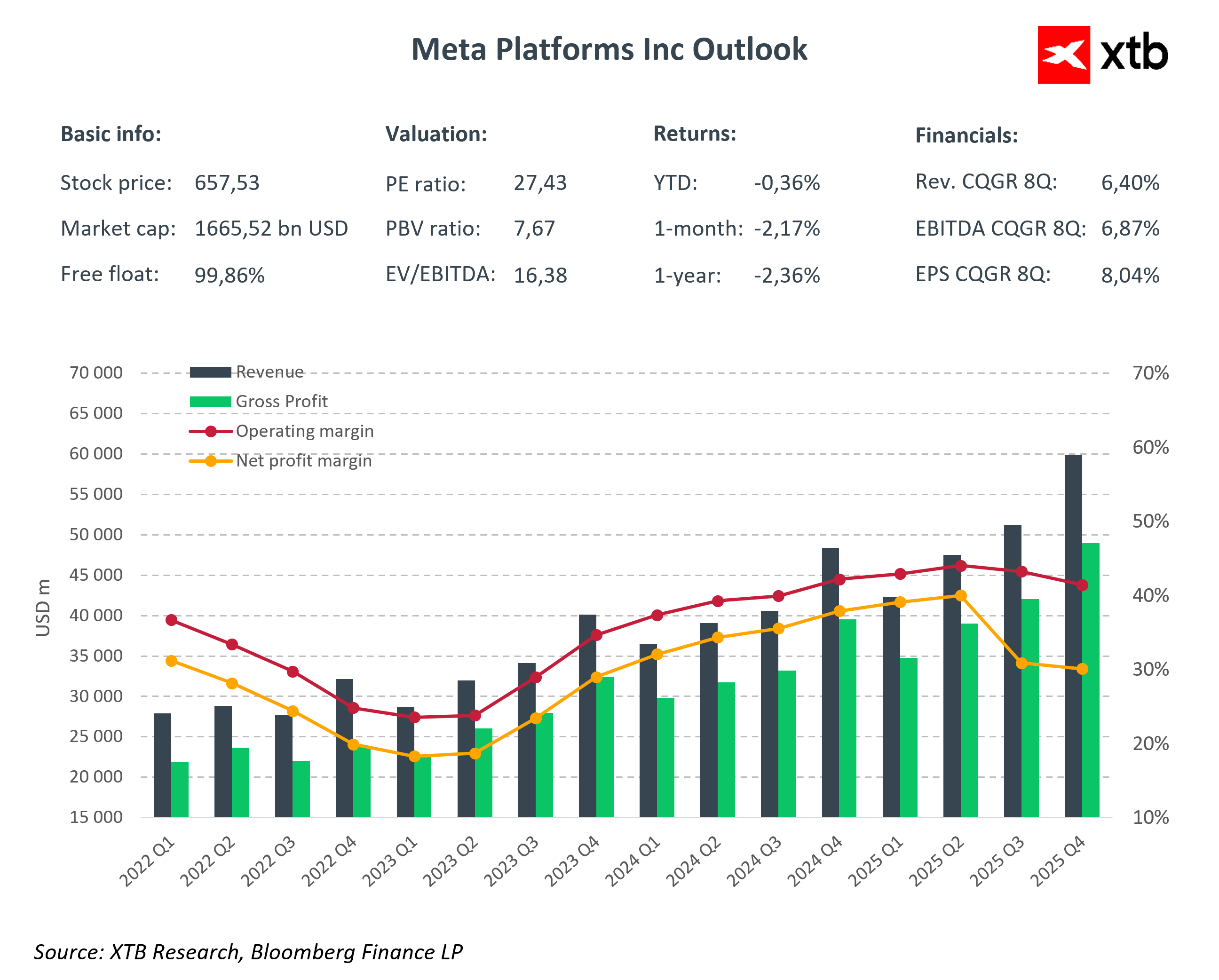
From a market perspective, the development of MTIA chips could influence Meta’s financial performance in the coming years. Producing its own chips creates an opportunity to reduce operating costs for data centers, which currently account for a significant portion of the company’s technology expenditures. Gradually reducing dependence on external hardware suppliers could also improve flexibility in budget planning and positively affect operating margins over the long term. At the same time, in-house chips support the development of AI-powered products, which could contribute to increased revenue from advertising services and new technology solutions in the coming years.
Monitoring progress in this project allows markets to better assess potential changes in cost structures, infrastructure efficiency, and the company’s ability to scale products and services as AI demands grow. Although full independence from Nvidia and AMD will take several years, the development of proprietary chips sends a strong signal about Meta’s strategic direction and its potential impact on future financial results and competitive positioning.
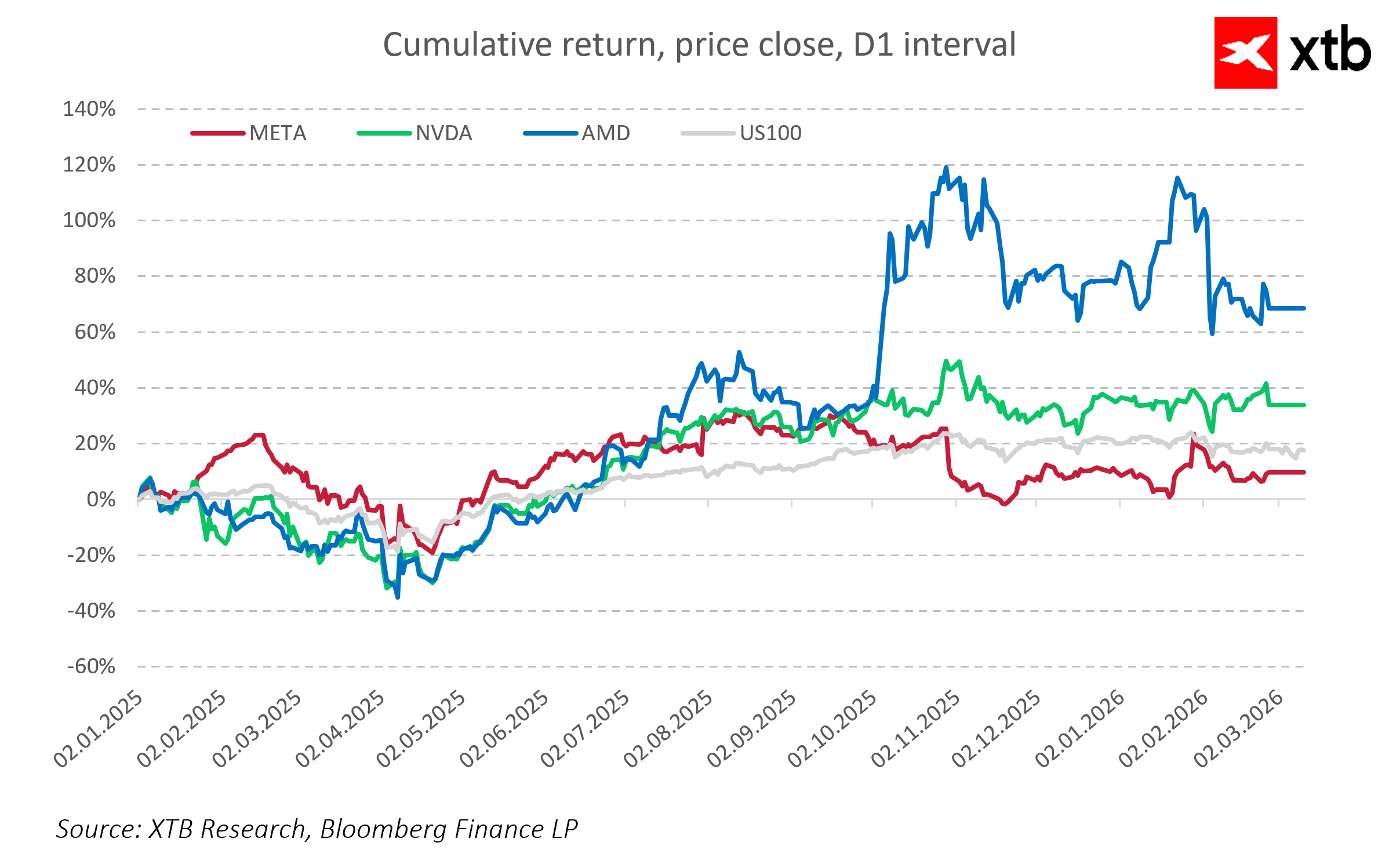
In the longer term, successful deployment of MTIA chips could gradually reduce Meta’s reliance on semiconductor industry leaders, improve cost structures, increase operational flexibility, and allow the company to test its own solutions under real-world conditions. This would prepare the company to increase the share of in-house production in total AI infrastructure demand, which could ultimately enhance financial performance and strengthen its market position in the field of artificial intelligence.
In a conservative scenario, if the implementation of MTIA chips allows Meta to reduce spending on external hardware by 15 to 20 percent over the next three to five years, the company could significantly improve the operating margins of its data centers, which currently account for a substantial portion of its technology costs. Additionally, greater control over its own computing infrastructure would allow for more precise scaling of AI services, which, combined with the growing importance of generative AI solutions, could positively impact revenue and profitability over the medium term while reducing sensitivity to fluctuations in the prices of external hardware.
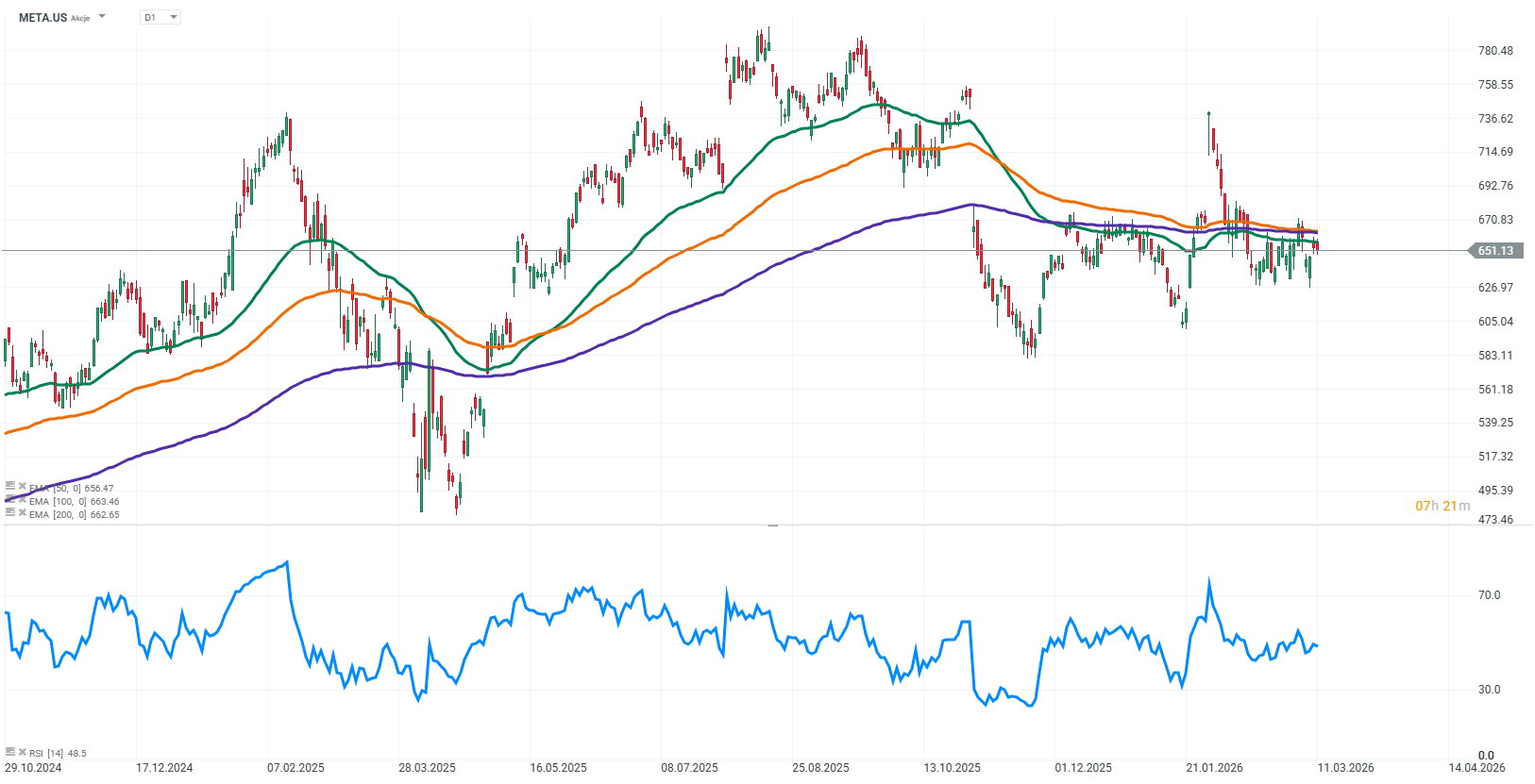
Source: xStation5
The material on this page does not constitute financial advice and does not take into account your level of understanding, investment objectives, financial situation or any other specific needs. All information provided, including opinions, market research, mathematical results and technical analyzes published on the Website or transmitted To you by other means, it is provided for information purposes only and should in no way be construed as an offer or solicitation for a transaction in any financial instrument, nor should the information provided be construed as advice of a legal or financial nature on which any investment decisions you make should be based exclusively To your level of understanding, investment objectives, financial situation, or other specific needs, any decision to act on the information published on the Website or sent to you by other means is entirely at your own risk if you In doubt or unsure about your understanding of a particular product, instrument, service or transaction, you should seek professional or legal advice before trading. Investing in CFDs carries a high level of risk, as they are leveraged products and have small movements Often the market can result in much larger movements in the value of your investment, and this can work against you or in your favor. Please ensure you fully understand the risks involved, taking into account investments objectives and level of experience, before trading and, if necessary, seek independent advice.