- The US ADP Employment Change report is expected to show that job creation remains subdued.
- The ADP report is more important than usual as Nonfarm Payrolls data is delayed due to the partial US Government shutdown.
- Kevin Warsh’s appointment as the next Fed Chair and strong US economic data are boosting a US Dollar recovery.
The Automatic Data Processing (ADP) Research Institute will release its monthly report on private-sector job creation for January on Wednesday. The so-called ADP Employment Change report is expected to show that the United States (US) economy added 48K new jobs, following the 41K new payrolls witnessed in December.
These figures will be observed with particular interest this time, as the US Bureau of Labour Statistics (BLS) announced on Monday that the release of Friday’s key Nonfarm Payrolls (NFP) report will be delayed due to a partial US government shutdown. With the ADP report as the main reference for US employment this month, a significant deviation in the final figures might have a strong impact on the US Dollar (USD).
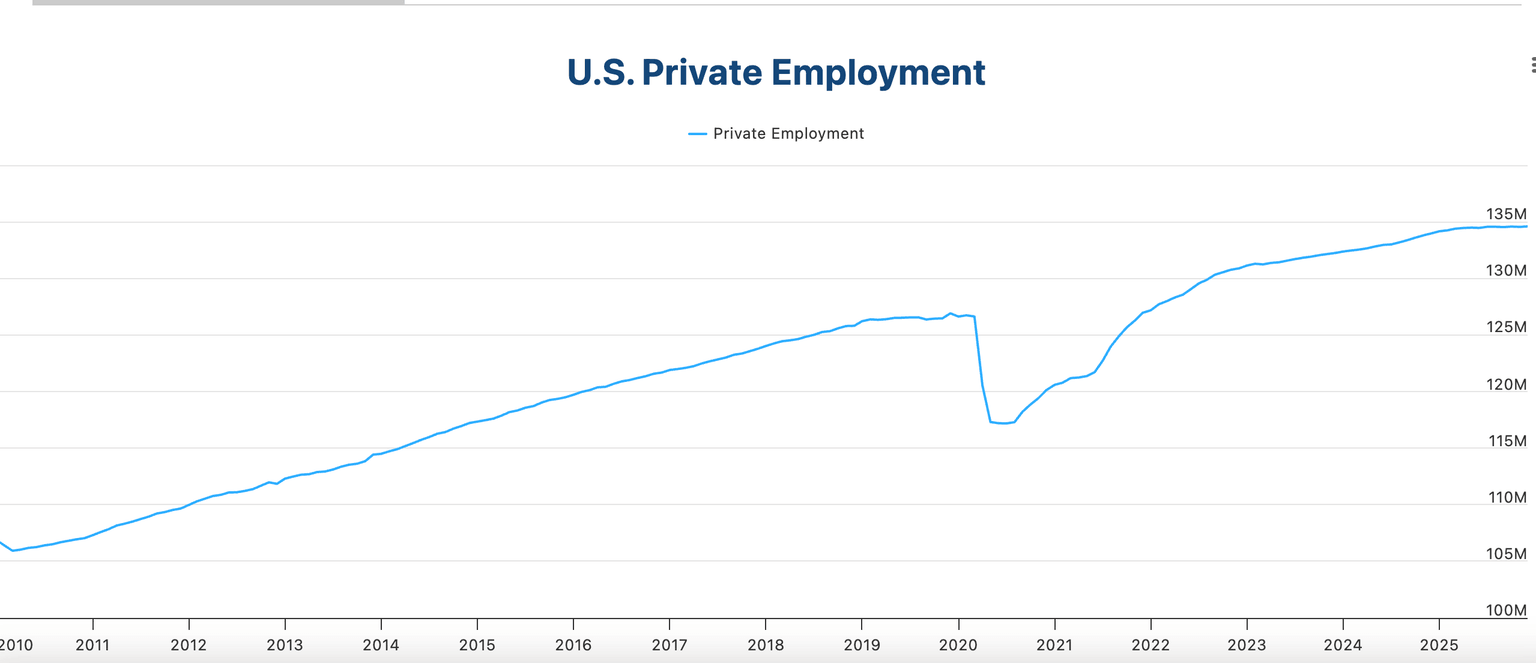
ADP Jobs Report will test the strength of the US economic recovery
January’s ADP Employment Change report comes in a context of improving optimism about the US economic outlook. A string of positive macroeconomic releases, namely the Q3 Gross Domestic Product (GDP) report and strong manufacturing activity, coupled with sticky inflation levels, have prompted traders to dial down bets of interest rate cuts by the Federal Reserve (Fed), at least until June.
This has boosted a recent US Dollar recovery, also triggered by investors’ relief after US President Trump confirmed that former Fed governor Kevin Warsh will replace Jerome Powell as Fed Chair at the end of his term.
The US economy showed a robust 4.4% anualized growth in the third quarter, according to the final GDP estimation released in January. Apart from that, factory activity expanded at its fastest pace in more than three years, according to January’s ISM Manufacturing PMI report, retail consumption bounced up strongly in November, and consumer sentiment data show a steady improvement over the last three months.
Bearing this in mind and considering that consumer inflation remains steady at levels well above the Fed’s 2% target for price stability, employment figures will be the last piece in the puzzle to assess the US central bank’s near-term monetary policy path.
January’s ADP report is expected to confirm that the labor market remains steady. Market consensus suggests that employment growth remains sluggish, but that employers are not firing either, or at least not to a large extent. This scenario cements the Fed’s stance of a cautious approach to rate cuts.
Atlanta Federal Reserve President Raphael Bostic stated at a panel speech on Monday that the central bank is close to the neutral rate and that monetary policy should remain “mildly restrictive” to get inflation back to the target. Unless the ADP shows a severe setback, this view would apply to the vast majority of the central bank’s monetary policy committee.
When will the ADP Report be released, and how could it affect the USD?
ADP will release the US Employment Change report on Wednesday at 13:15 GMT, and it is expected to show that the private sector added 48K new jobs in January.
The immediate US Dollar trend is positive. The US Dollar Index (DXY), which measures the value of the Greenback against six major currencies, appreciated 2% in the past week. Market’s relief following the appointment of former Fed Governor Kevin Warsh as the next Fed Chairman halted the US Dollar’s bleeding, while bright US economic data, a trade deal with India, and hopes that negotiations with Iran might de-escalate tensions in the Middle East, keep the Greenback supported.
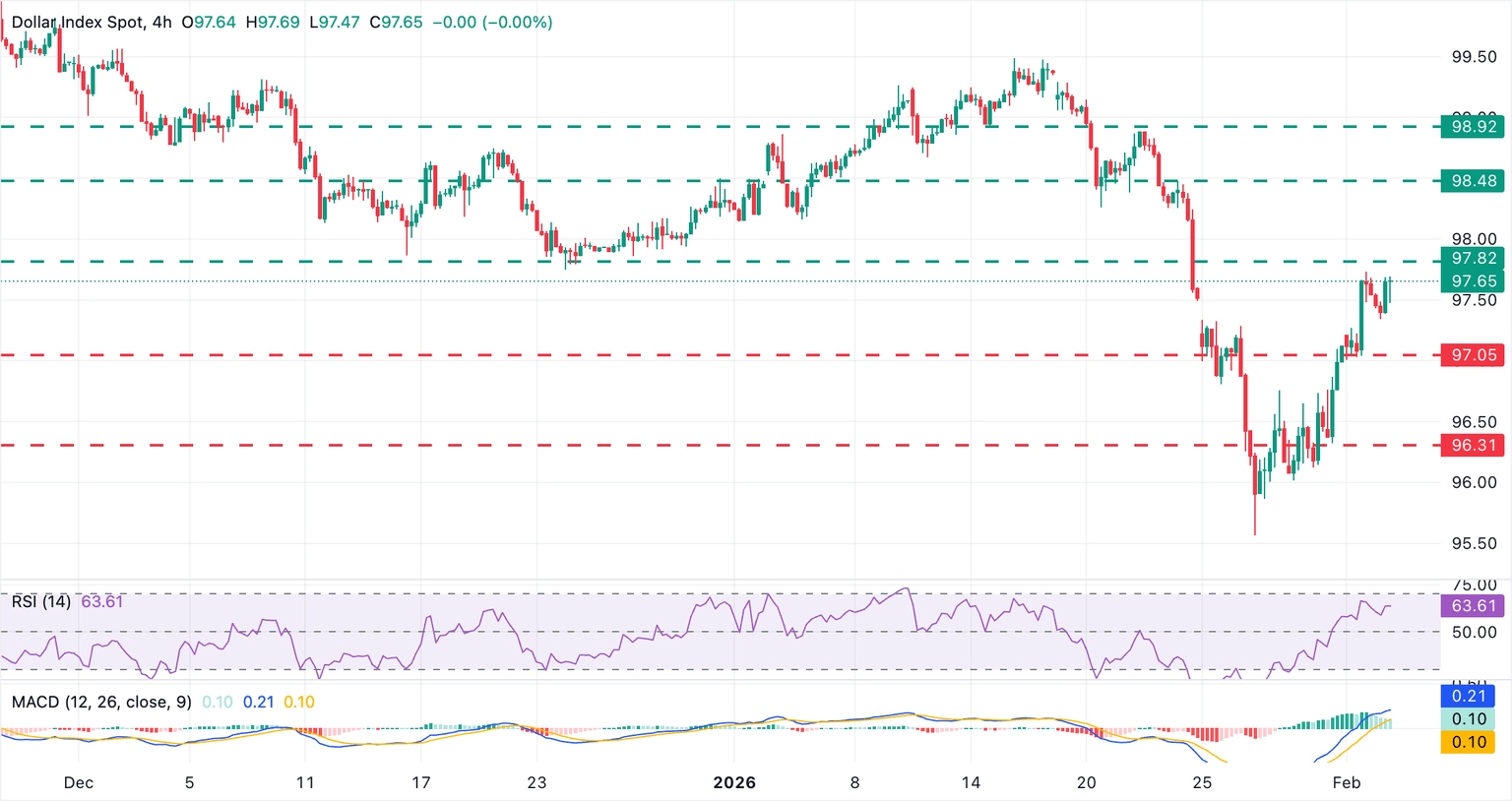
Guillermo Alcala, FX Analyst at FXStreet, highlights resistance levels in the 98.00 area and 98.48 as the main hurdles for USD bulls: “The US Dollar Index is on a bullish correction amid a broader bearish trend, and bulls need to breach resistance at a previous support area around 98.00 to confirm a larger recovery and expose the January 23 high, at 98.48, ahead of the 100.00 round level.
On the downside, Alcalá sees the 97.05 level as key to maintain the immediate bullish recovery alive: “A bearish reaction below the 97.00 level would put the current recovery in question and increase pressure towards the January 28 close, at the 96.35 area.