There is a bias towards higher energy prices and slightly weaker stocks this morning, as the Brent crude oil price is higher by 3% and is back above $103.50 per barrel. European equities are clawing back earlier losses while US equity futures are pointing to a weaker open later today. Interestingly, European stocks seem to be shrugging off the rise in the oil price, the risk is that they cannot do this for the long term as elevated oil prices threaten the economic outlook.
Oil price: Shipping crisis turns to supply crisis
The next stage of the Iran/ US war has seen both sides step up attacks on energy infrastructure. The oil supply crisis of recent weeks could be shifting from a shipping crisis caused by the closure of the Strait of Hormuz to an oil supply crisis, where energy infrastructure across the Gulf is a target of Iranian attacks. In the last few hours the US embassy in Baghdad has been hit by Iraqi Shia militias, who are aligned with Tehran, the Shah gas field, one of the world’s largest, in the UAE was hit, and a tanker was also hit in the Gulf of Oman. The conflict seems to be getting bigger, and it is unclear when or how it will end. This is likely to keep the oil price above $100 per barrel for some time.
Why are defense stocks falling?
The Eurostoxx 50 index is under pressure on Monday, with losses for luxury names, defense stocks and tech giant ASML. Rheinmetall and Safran are both lower today, but why are defense names falling when we are in the midst of a major war? Rheinmetall is lower by 20% since its September peak, and Safran is down 5% in the past week. The reason for this is a mixture of lofty valuations, cheaper energy stocks and some weak earnings guidance. Rheinmetall reported an earnings forecast that was below expectations for this year, which has cast doubt on the effectiveness of the defense spending pledges by the German government and other European nations. Investors have been large buyers of defense stocks in recent years, which has pushed valuations sharply higher. Rheinmetall’s P/E ratio is 71 x earnings, which investors are not willing to buy in this market.
In contrast, the best performers in Europe since the onset of this crisis are ENI, TotalEnergies, Danone and BASF. The rotation out of highly valued sectors like defense and into energy companies is ongoing and is likely to continue as the price of Brent crude oil remains firmly above $100 per barrel. This is also boosting the FTSE 100, which is bucking the trend and posting a small gain so far on Tuesday. The FTSE 100’s energy sector, which makes up 11% of the index, is acting as a cushion for the UK index, which remains better supported than its European peers.
Bond recovery ahead of key central bank meetings
Interestingly, although equities are struggling today, bonds continue to recover. The RBA, Australia’s central bank, hiked rates this morning to 4.1% from 3.85%. This is the first central bank to react to the inflationary pressures posed by this war. This is the second consecutive rate hike from the RBA, who are concerned about stubborn inflation. However, it was a tight decision with a 5-4 split in favour of a hike. Although there is robust debate at the RBA on the outlook for inflation, the governor talked up the inflation risks to the economy from this conflict, even though there are warnings that the Australian economy could face recession if energy prices remain elevated.
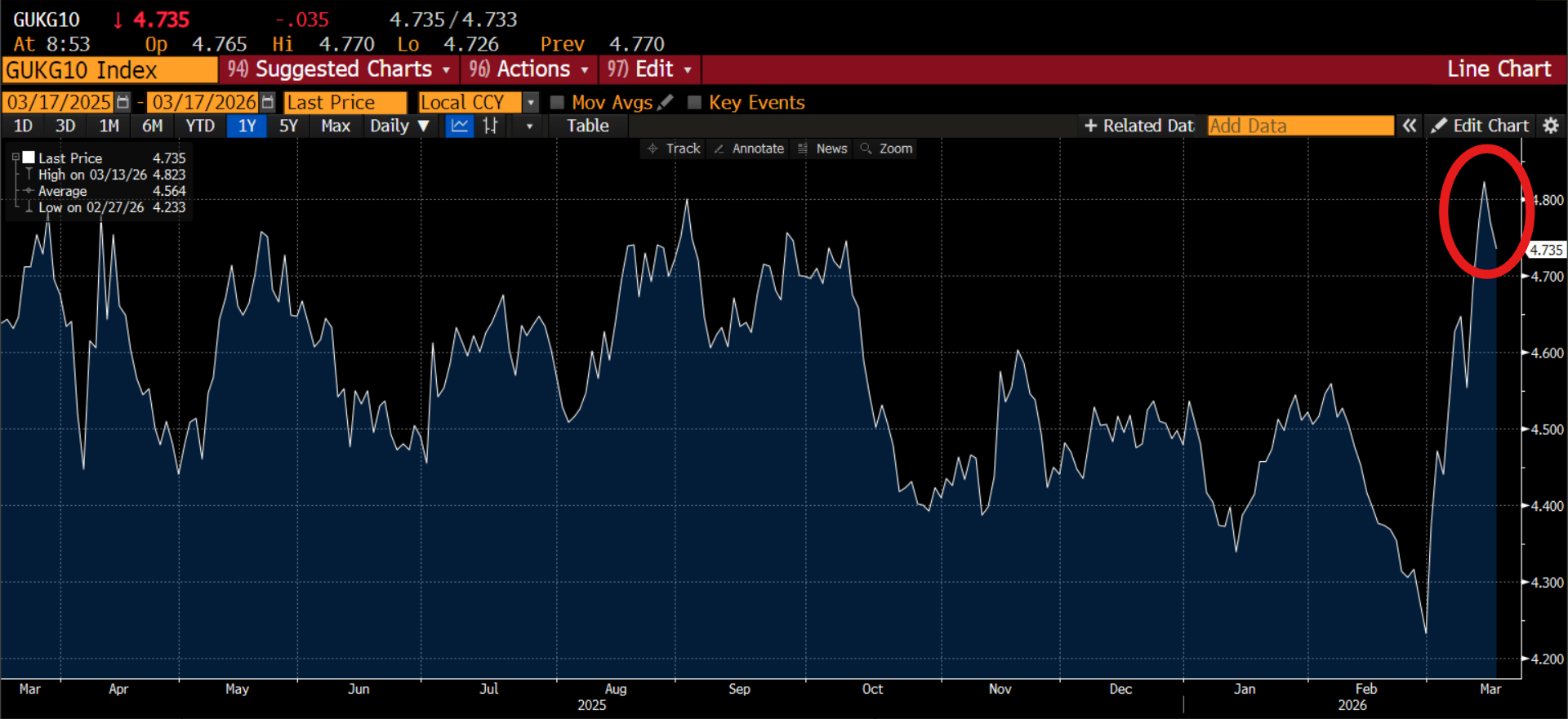
We do not expect the Fed and the BOE to join in with the RBA’s hawkish message. The pullback in European and UK bond yields in recent days is worth noting. Thursday’s UK labour market data is expected to show another increase in the unemployment rate to 5.3% and another quarter of job losses. How can the BOE hike rates when the economic outlook remains so weak? The sharp drop in UK Gilt yields in recent days is a sign that the market could be pricing in a more dovish than expected BOE meeting, with Andrew Bailey more likely to signal a prolonged hold, rather than a rate hike on the back of the commodity price spike.
Chart 1: UK Gilt yields are falling into this BOE meeting
Source: XTB and Bloomberg
The material on this page does not constitute financial advice and does not take into account your level of understanding, investment objectives, financial situation or any other specific needs. All information provided, including opinions, market research, mathematical results and technical analyzes published on the Website or transmitted To you by other means, it is provided for information purposes only and should in no way be construed as an offer or solicitation for a transaction in any financial instrument, nor should the information provided be construed as advice of a legal or financial nature on which any investment decisions you make should be based exclusively To your level of understanding, investment objectives, financial situation, or other specific needs, any decision to act on the information published on the Website or sent to you by other means is entirely at your own risk if you In doubt or unsure about your understanding of a particular product, instrument, service or transaction, you should seek professional or legal advice before trading. Investing in CFDs carries a high level of risk, as they are leveraged products and have small movements Often the market can result in much larger movements in the value of your investment, and this can work against you or in your favor. Please ensure you fully understand the risks involved, taking into account investments objectives and level of experience, before trading and, if necessary, seek independent advice.